Wednesday

Book Reviews!

Hey, y'all!

Heather here.

And I am excited to share that I've been shamelessly enjoying my summer break from college by neglecting the real-world. Yep. I've been indulging in my favorite hobby--reading YA fiction--instead of working on house projects, swimming at the pool, and even writing my book.

But that's okay! I've earned it and will get back to revising my novel in due time. But first, books! Books! Books!

YA romance (especially when written by Miranda Kenneally) is kind of my jam right now, and I've finished three books of hers in the last week. Needless to say I haven't been writing (passively brainstorming a chapter rewrite when not reading); I have been laughing, crying, and rooting for girl to work through her issues and hang out with McDreamy, instead.

So without giving away anything huge, I'm going to share some tidbits on the books I've read this week, as well as the one I'm currently working on.


1. Catching Jordan by Miranda Kenneally

Jordan is the quarterback of her high school football team and to say the least, she kicks ass. And I mean everyone's. She's got her head on straight. She's focused on playing college ball for Alabama, and she has no interest in dudes unless she is throwing a pass to score a couple of yards to win the game. But then Tyler Green waltzes into her life, and he's sexy. Real sexy. But he's also a quarterback and she has enough competition securing her position because of her gender, and suddenly, Jordan starts losing focus. And to top it all off, a love triangle begins, and oooh is it good!

The characters in the story are very entertaining, fully fleshed out, and memorable. I am a huge fan of strong female characters who can pull their weight and earn respect from those around her. Jordan is one of them, and her voice will make you laugh, long, and empathize with her struggles, whether you're a fan of football, or not. If you're interested in reading who wins her heart in the end, you can find it here. 


2. Breathe Annie Breathe by Miranda Kenneally

Tears, y'all. Tears!!!

I immediately became connected with this character, as Miranda's word choice made me empathize with her situation right off the bat. Not only did she lose her first love, but the sting of it (almost six months later) is still as fresh as it was the day their relationship ended when the story begins. But it wasn't a breakup that made her life break at the seems. It was death. And now, despite her hatred of running, she is training to take on the marathon her guy never had the chance to finish. OMG. It's amazing!

While the novel starts sad (and I'm normally not a fan of sad stories--happy Disney addict right here!) this one drew me in and kept my interest until the very last page. The story follows her road to recovery in more ways than accepting the loss of her first love. It's about endings and beginnings. Dying embers and sparks of new flames. And there are hot guys, too. Which is always important. :D

If you're looking for a character to root for, and even one that you could read and make sense of your own struggles in life (even if your guy or girl didn't die), then I highly recommend Breathe Annie Breathe. You can find her story here.


3. Stealing Parker by Miranda Kenneally (what??? again? Yes! She's amazing!)

This one had me on edge a few times from the very beginning. Parker (our protagonist) has a mom who walked out on her family in pursuit of her female love interest. To be clear, I want to make sure you know it was not because of the homosexual relationship! It was the fact that Parker's family was very religious and the church acted as a villain in such a difficult time and made it seem one-dimensional.

I read through the pages listening to Parker being continually hurt and gossiped about from those that claimed to love God, and it was hard to swallow (and I'm a Christian!) But I kept reading, hoping Parker would leave that church and find another--one that would love her and her family as many churches in the real-world do. I was also rooting for reconciliation with her mom, despite all of the hurt and abandonment she had put her daughter through (an issue that is close to my heart, as my biological mom left my family when I was a child). And I was really hoping that Parker would find her self-worth in something other than messing around with guys. (It was so sad to read.) Identity is huge. In any society. And this book explored the struggles and triumphs of such a topic.

Well, I can say that I continued to push through--despite the politics and religious issues in the story, and can say that I was very happy with the way things turned out. Parker didn't have it easy, but her character arc was beautiful. I highly recommend it! If you're interested in reading it for yourself, you can find it here.


4. (Currently Reading) Pushing the Limits by Katie McGarry

This one is...beautiful...heart-wrenching...and so difficult to put down!

Goody-two-shoes meets sexy-and mysterious-troublemaker? Um...yesssss!

Sounds a bit cliche though, right? Hasn't this story already been told like a thousand times? No. It hasn't. It definitely hasn't.

Echo (our female protagonist) has been haunted for the last year and a half by a nightmare she can't even remember. All she knows is that her mom tried to kill her and she's got the scars on her arms to prove it. What? :O I know, right?

Then there's Noah (our male protagonist), who is a troubled foster kid with an attitude and a reputation for screwing girls and moving on.

So what do the two of these characters have in common? They've both been through hell and are required to see the school social worker/clinical therapist in order to work out the futures that are coming quicker than the night their lives changed forever.

There are tears, and laughs, and cravings for justice in both of their stories. But what's even more delicious than that? The way their lives intertwine in the midst of it all.

I haven't finished this one yet, but so far (I'm halfway through) it's amazing! I'll update y'all when I'm done. But if you want to check it out before then, you can find it here. 

But I have a date with my book. So if you don't mind, I'm going to get back to it.

What are you reading? And does it sound like any of these stories? If so, please don't keep amazing books to yourself. It's selfish. Very, very selfish. ;)

-H


Saturday

Lemons


Lately I have been wondering why I should share my writing with the rest of the world. 

I have tasted the bitterness of rejection from my peers and thought, "Should I open up myself to strangers and show them the deepest, most vulnerable part of who I am?" And, "Why should I reveal the human being beneath this mask?" I have enough heat to deal with from myself about what I don't like about my stories. Why pour gasoline on the fire?

This battle has been raging within me, fighting the urge to slam the door when I've only just cracked it open. To remain in my comfort zone—where it's safe—and I know exactly what to expect from it. 

But I don't want that. I want to share my stories with the world. I believe they have the potential to make readers laugh, cry, root for my protagonists to overcome their flaws and reach their goals, and to want an understanding of who my villains are at their core. 

But in order to do that, I will need to share these stories with agents, editors, and publishers (should they make it that far), and that is absolutely terrifying in my mind!

Don't get me wrong, I know rejection is part of the writing process, a milestone so to speak. I am expecting that, and am even looking forward to it, oddly enough. I am not afraid of getting punched. In fact, the more I get hit in the face, the more focused I become (I train at an MMA gym, so this is not just a metaphor I'm using). What I fear is failure.

I am truly, madly, deeply afraid of failure. Of total knockout. Of getting choked out and not being able to get back up again, metaphorically. And if that failure means putting my writer's soul on the line in the process, well, the thought alone makes me consider tucking tail and running for cover before I ever really make it out of my writer's hole. 

But on the day I seriously considered hiding in order to accommodate my fear, someone—or something—told me not to, everywhere I went. 

First, I was told a story about a lady who stepped out, doing what she believed God told her to do, and was rejected in front of an entire crowd. She went home and cried, believing her introverted self was not meant to stand, but instead, to remain hiding in her comfortable corner. She battled for days with her insecurities, her doubts, her fears of facing rejection. Again. But then she got up and went back for another round. She chose to be brave. She chose to fight for what she believed she was supposed to do. She fought for herself. She fought for the lives she believed she was called to step out and love.

Now she travels around, speaking at conferences and concerts—encouraging others with her story; spreading hope and love and her testimony to whoever may choose to listen. And after sharing her testimony at these events, she says, "If I would have let that rejection keep me from getting back up again to pursue the path I believed I was suppose to take, I never would have made it here today. I wouldn't have become who God made me to be. I wouldn't know what I do now, that God is faithful, and that even when others reject me and the calling He has placed on my life, I know He has a greater plan to get me where I need to go, regardless of whether they believe in me.
Or not."

Encouraging, right?

That same morning someone posted a quote on social media by John F. Kennedy that said, "Those who dare to fail miserably can achieve greatly." The person who posted that quote added their own thoughts which read, "Don't allow fear to control you and keep you from stepping out/trying. You might just be surprised by what you are capable of."

I was like, "Okay, God. I'm listening."

Then, while making coffee, I read the "scripture of the day" I have propped up beside my beloved Keurig.


Stand firm. Fight for what I believe I'm supposed to do. Sound familiar?

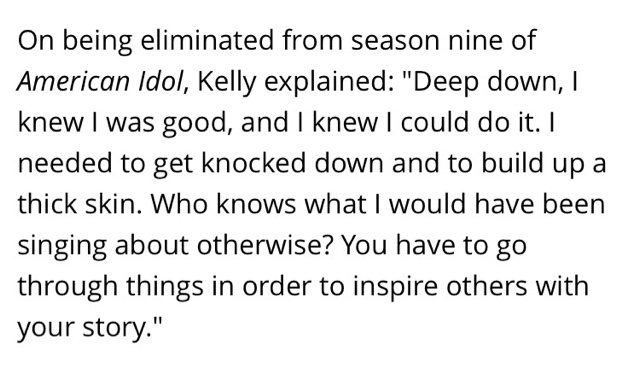
Then I read an interview with one of my favorite artists, Tori Kelly, and was encouraged by this:
These were only a few words of encouragement I received on the morning I was considering making a run for it, before I ever really tried to put myself out there. And there have been many more since.

Needless to say, readers, I have been inspired to leave my corner and fight the giant in front of me, again. I have counted the cost of what it will take to reach my dreams and become a published author, even if it takes twelve years and several manuscripts to make it happen (I have not yet queried as my manuscript is about to undergo another round of editing). 

I plan to begin the query process by the end of the year. Still afraid. Still unnerved by the unknown of what the future could bring. But I will walk this road in faith that I heard God tell me to quit my almost-career as a teacher and to stay home and write. 
I may be afraid of the unknown, but I have the courage to step out, remembering that if my God is for me, who can be against me?
And knowing, yet again, that getting knocked down along the way will just mean more lemons—and therefore—more stories to squeeze out of those experiences. 

-H

Friday

Three Tips for Surviving Story Critiques

Criticism is hard to swallow. 

Period. 

No matter how it is worded, us writers want to guard our prose babies and protect them from the harsh words of others. But it is also how our written offspring grow from helpless first drafts into published members of the literary world.

You see, us writers seem to think that our work can be good on its own—and it is possible. But do we want our stories to settle for just being good, or do we want them to be great? I personally, want to give readers the best story I can give them, and I know that will require help along the way. I will need to have my story critiqued in order to learn where it is not working. Unless, of course, I want my readers to fall head-first into the pot holes I left behind while paving my prose into a road my readers could follow. 

But that doesn't mean it is easy to share our most intimate, heart-beating stories with others; especially if we know they will tear it apart so we can learn how to make it better.

In my honest opinion, critique is the most difficult part of the writing process. But if I want to be a brave writer instead of one that screams mediocre, I will need to place my work into the hands of someone else; whether it be a critique partner, an English professor, an editor, or peer workshop. 

So what are some ways we can deal with criticism in order to write a better story? Here are three tips I have learned. 

1. Grow thick skin.
We cannot defend our work! The point of seeking corrective criticism is not so we can be praised for writing such a great story. It is so it could become the story we are trying to write. If we defend our work, we will be selling ourselves short. We will be wasting our time and that of others, and it will not profit anyone. So let's take a deep breath, grow lizard-thick-skin (or maybe dragon scales if we are awesome like that), and hear what our readers are saying about our work.

2. Listen to the majority.
If one reader states an issue, we need to consider what is being said. But if many readers state the same problem, we need to change it, remove it, or figure out a better way to communicate it more clearly. After all, if what we are writing seems clear to us but confusing to readers, our story won't be understood as we are intending it to (and we aren't trying to write a foreign language, right?) But if our prose is being read that way by the majority, the issue is not with their understanding; it is with the way we are communicating.

3. Recognize what is constructive criticism and what is hateful feedback. 

There is a big difference between the two, and in order for critiques to become helpful to us writers we need to understand what each of these are.

Here is what construction criticism looks like:

"This character is flat. Give him a flaw he could work through and overcome." 
or
"This part of the story does not make sense. Can you please clarify what is happening here?"
or
"There is a lot of telling in this story. Add more sensory detail to show us what is happening while keeping us in the moment."

Constructive criticism is truth--which we need--but it has the purpose of tearing down and building up behind it. If there are cracks in our foundation, the whole house will come tumbling down at some point, and the last thing we want is for our readers (not our fellow writers, but the public) to notice those cracks. The goal for constructive criticism in writing is to discover what is broken so we could fix it.

But some critiques are not helpful at all. In fact, they aren't even critiques! If there are no suggestions for how to improve a story (or the writing in general), and only negative remarks, they are nothing but hate-mail. Those comments only tear down a story, and leave it roofless and broken with no plans for repair. Here are some examples of hateful feedback:

"You spent so much time writing about things I don't care about." 

(Okay, is it the content you don't like? Could you please specify what you don't care for?)

or

"This story was stupid." 

(Okay, could you please give me some reasons why, and more importantly, how I can make it better?)

"I hate this character."

(Okay, what about them don't you like? Do you have any suggestions for how I could create a more likable character?) 

As you can see, these statements are not helpful. However, before we set the comments aside, we need to take the time to consider if we are being sensitive and defensive (which could blind us from seeing the truth). Then we should compare those comments with what the majority of readers are saying. Do they agree with those comments? Or not?

If the majority says otherwise, we can discard those comments as hate-mail and address the other critiques for our next draft. 

Now let's recap. What are the three survival tips for story critiques?

1. Grow Thick Skin 
2. Listen to the Majority 
3. Recognize the Difference Between Constructive Criticism and Hateful Feedback

What have been your best and worst experiences with criticism related to writing? What have you taken away from those experiences? Don't be shy. Be brave. Sharing is part of the writing process. ;)

Thursday

What I Learned From Hiring a Freelance Editor


So, we have two options here. 

One: the truth. 

Or

Two: a sugar-coated blog post which would be a big waste of your time to read.

I prefer to waste my time doing other things (like rearranging my book case for the tenth time this month), and assuming you do too, I'll give it to you straight. :)

Here it goes: 

1. Editors are expensive, but so worth the investment.

I hired mine for a developmental edit, which is a serious line-by-line analysis of all the details in your manuscript. Every. Little. Detail. 

Picture it this way, you build a house and it's looking really good. You feel like your foundation, walls, paint, roof, and plumbing are coming along nicely, and you even have a family that wants to dwell within those walls that you've been working so hard on. And then the inspector comes for a visit. 

They look at every detail, as you've hired them to do. After all, you want a professional opinion that is going to help you make sure the work on the house is the best it can possibly be, right? 

But then the inspector tells you a wall isn't working to properly support the roof, there are some cracks in the foundation, and the family you thought would be the perfect match for the house look more like characters in a Sims game, than real people. You realize you have a lot more work to do. You realize how daunting and time consuming the task will be to fix everything. But you're willing to do it because you'd be crazy to put a house on the market that is not worth buying, correct? So you realize that bringing in an inspector was the best investment you could make for your project. 

2. Plan to make changes once you receive your manuscript back from an editor. 

Before you ever send your manuscript to a professional you should count on putting in more time to brainstorm changes once you receive it back. This is because, although you are brilliant, a second pair of eyes to analyze your plot and story lines, characters, world building, tension building, and so on, will help you get your name out there and make an impression on readers. You may be a talented writer that will dazzle the world with your mad writing skills once they become public, but even J.K. Rowling and Stephen King have a whole team of editors to help them make their good project, a great one. (And if the editor you hire doesn't have much to say about your project, they probably aren't doing their job.) 

So, do the absolute best you can to build your house with purpose, passion, and a solid plan. But know that your editor's job is to help you produce the best artwork possible, and doing so may mean a lot more work for you when the time comes.

3. Try not to be defensive while reading your editor's notes. 

When I was reading through my edited manuscript I tried to go in with a teacher/student mentality. I've been writing all my life—essays, journal entries, short stories, some blogging, but this was my first attempt at a 96,000 word manuscript. 

I knew I was not an expert, and wanted to learn how to improve my manuscript and my craft as a whole. But there were points that I had to remind myself not to get defensive, because if my second set of eyes was saying that something wasn't working, I needed to take that into consideration for two reasons. One: they have 15+ years experience in writing/editing/writer coaching, and a master's degree in the field. And Two: they are an expert in helping writers develop their manuscript into something that will sell, and something that readers will enjoy and recommend to their friends. 

So, take my advice and listen to what your editor has to say. Take a step back from your baby and look at it as a reader. If it looks like you're trying to make things work, change them. If the clothes are too small or too large, find some that fit and will make your baby the best dressed around. 

So, there it is folks: what I learned from hiring an editor. While the process may be difficult, or frustrating at times, or expensive, I believe it was the best choice I could've made for my book. I also happen to think my editor is the best (maybe I'm being partial, but seriously, I learned so much more than I anticipated by bringing her in)! To read my honest review of working with her, click on this link: http://tanyagold.com/recommendations/

Happy brainstorming! 

-Heather 


Tuesday

Survival Tips for Revising Your Novel

Writing is hard y'all. It's time consuming, stressful, and of course there are the highs and lows the emotional roller coaster takes you on. Every. Single. Time.

But it's also one of my favorite things to do in this world (I know, I sound crazy right now). It's hard work, but when I see how my story flows, or how a character makes me laugh, and I read the words that I wrote and think, "Whoa, I wrote that?" it's one of the most accomplished feelings in the world.

Revising is no different.

The initial draft may be finished, with a detailed plot, story, and fully developed characters acting out in front of my eyes, but there's a reason the first draft is called rough. And now that I've written a 400 page novel of my own, I can't help but feel like the term rough has a double meaning: one for the state of the draft, and the other for the experience of the author revising that draft.

So, during the revision process of my own I've learned a few things that could be helpful to you on your journey through revising a novel. Here are some things that have worked for me.

1. Set a deadline for your draft.
Doing so will give you an idea of how to prioritize your time and complete the task. The exact amount of time you give yourself will depend on many factors, including: how quickly you work, how much time you have to work on your draft, and when you think is realistic to have it finished. I'm on summer break (from college) right now. So, I have a lot of time that was freed up to revise my first draft. I wanted to have the second draft finished by the time classes began in the fall, and decided to set an eight week goal for myself (two weeks to take a break from my novel in order to return with fresh eyes, and six weeks to revise it). Then I contacted the editor of my choice.

2. Hire an Editor.
I've been researching freelance editors for awhile now, knowing that whether I decided to query, or self-publish, I wanted a professional set of eyes on my manuscript to polish it up. I'm not perfect y'all, and neither is my writing. In fact, I have a ton of things to learn about good writing, and continue to do so on a daily basis. (Hence my "A Writer's Everyday Journey" as my blog's tag line.)

I emailed the editor of my choice and got the ball rolling. We communicated several times after that through email, and then we had a phone conversation. We got to know each other's styles a little and talked about what services I wanted from her (there are several types of editing), and what she wanted from me (notes, outlines, character sketches, etc). We also talked possible deadlines, and that's where my accountability came from. A few days later I signed an agreement to have my second draft to her by July 28th, and I've been working like a mad woman ever since. Want motivation to finish a draft by a certain date? Hire an editor. When there's money on the line, slacking off is not an option!

3. Set a Pace For Yourself.
It could be the amount of pages you revise per day, per week, per month—this is per the author's preference. I recommend dividing the amount of pages you have to revise by the amount of weeks you have until your deadline, in order to prevent yourself from falling behind. You don't have to work on it everyday—it could be exclusively on weekends. But this way you'll know how many pages per week you'll need to revise in order to meet your deadline. Otherwise, you could hire an editor, set a deadline, but end up waiting until the last minute to revise (thinking you have more time than you do) and find yourself in a predicament.

4. Take Breaks!
As I stated above, revising is hard. It requires time, concentration, and creativity at it's best. This combination has the ability to write Bestsellers, but each requires a break to perform at optimal level. Otherwise, you'll waste time expending loads amount of energy, trying to concentrate on being creative. It's torture. Pure torture. Don't do it to yourself! Schedule in breaks after you've revised a certain number of pages, or after working for a certain amount of time.

5. Exercise.
I am telling you that the only way I have not gone nuts over the past few weeks was because of exercise. I'm a runner, so it's on my mind already. But there have been many times when I've sat in front of my computer having already taken a break (or several), and have felt like I was going to blow steam from my ears. Then I decided to run off that steam, and returned to my computer high on endorphins. My mood was good. I was optimistic about making my deadline and doing it well. And I didn't lose my mind. If not for anything else—run (or walk, lift, swim, yoga, etc.) to save your mind. You're a writer and you'll need to take care of it to continue doing what you love for years to come.

6. Chocolate.
The word is self-explanatory, because chocolate is the secret to happiness. Buy some. Eat some. Revise that draft.

I need to get back to revising my manuscript now in order to meet my deadline, so I must end this post now. But head back this way in a few days to read my post about what to keep and what to get rid of while revising (it's much more than punctuation and grammar—way, way more than that!) Until then, happy writing!

-Heather

Monday

5 Things to Do While Writing Your Novel


There's a difference between an author and a bestselling author: book sales. Below are 5 things I learned to focus on while writing my first book. They also happen to be what every bestselling author includes in their prose.

1. Organization.
Without it, your novel will be a headache for you to write, not to mention confusing to readers. You may know what you're trying to say, but they won't. Map out your story and scenes during the prewriting process, and stick to it. Just as every story needs a beginning, middle, and end—they also need flow. If it doesn't flow smoothly, it's not working, and this means more work for you. Remember those outlines you learned in freshmen English? Well, here's your real-world application. :)

2. Purpose.
What's the point of this sentence? Paragraph? Chapter?
Every line, paragraph, and chapter must be used to communicate a plot point, a character goal, action to increase tension, or action to advance the plot. If it doesn't, it's not needed and you shouldn't include it in your novel.

3. Mystery.
Adding mystery to your novel means motivation for your audience to keep reading. This is something you want to include from the very first line of your book. Why is she on the run? How will he warn his friends? How did she become an orphan? If your book is part of a series, try and write a cliffhanger ending. Your readers will be dying to get a hold of your book's sequel to find out what happens (again– to discover the answers to their questions), and that'll mean more sales for you.

4. Plot Twist.
You should surprise your reader at least three times during your novel. This will keep your reader from becoming bored. If there are no plot twists, your novel may seem dull, and a waste of time to your reader. Make your audience think they know where you're going with your plot and then rip the rug out from under them (but please do so with caution! Always make sure the twist will enhance your story, not steer it in some random direction).

5. Language.
Think efficiency. Make your reader feel like they're in each scene, but don't overdo it. You don't need five paragraphs about what a scene looks like, because your reader wants a story that moves along anyway. If you can replace five words with one, please do so.

Well, there you have it folks- five things I learned while writing a novel. Keep them in mind as you write your Bestseller.

Want to know 12 Pet Peeves Readers Have That Will Get Your Book Shelved? Click here to find out.

Happy writing!

-Heather


Tuesday

Savage Race 2015: Identifying With My Protagonist


Barbed wire. Ice cold water. Forty-Three foot ramps.

When I signed up for the Savage Race, I had watched the promo video, read articles about it, and had developed an idea of what to expect. But envisioning and experiencing are two different things, my friends. As I stated in my post Savage Race: First Sneak Peak Into My Book Series Acts of Valerie, I was completely unprepared for an activity like this, and that was the point. I wanted to put myself into a similar situation as Valerie, in order to identify with her experience on the obstacle course during training. Well, my goal was met, and even moreso than I was expecting.

During the race I gained insight into a do-or-die mentality. I also came to understand the physical strain and requirements of such an experience. But through it all, I kept in mind that signing up for something willingly, and being forced into a situation are two completely different scenarios.

When I arrived at the event I experienced a combination of emotions. Fear and anxiety were the most prevalent. Adrenaline pumped through my veins. I questioned what I was doing. I wondered many times if I were crazy, and decided with each of those wonderings that I had lost my mind. So much, that I kept walking toward the starting line.

I witnessed participants from every direction revving themselves up—chanting similar tunes to athletes before a big game. Some were crowdsurfing, laughing and carefree—as if their whole lives had brought them to that point. And despite my own fear and anxiety, the excitement around me was contagious. Which was a good thing.

I put on my gloves, started stretching, and imagined myself in Valerie's shoes. Which included identifying with her position, and why she was there in the first place. I told myself that I didn't have a choice—I had to get through it. "Don't think. Just do it," quickly became my motto; one that would carry me to the finish line.

I don't remember what prompted us to begin running. Whether it was someone shouting GO, or if it was a recorded countdown of some kind. All I remember was the crowd in front of me moving, and myself following close behind. I was in the zone—focused on what was ahead of me and how I suddenly had no way of getting out of it without becoming embarrassed if I decided to tuck tail and run the other way.

I didn't know if I was going to get through every obstacle, or if I'd fall flat on my face in the mud.
I considered how my cousin had come out to race with me (who, mind you, had not ran, trained, ate, or slept like she'd needed to for such an event), and how quitting would have let her down. So I let my fear, anxiety, and feelings of inadequacy be replaced by determination. All I thought about was taking one step at a time. All I knew was that I was going to finish that race, no matter how difficult it would be.

When I tell you that we ran five miles in the mud—it is no exaggeration! It stormed the day before and left the course with several different textures of dirt and water. There were spots on the course where mud was so thick, that people were losing their shoes in it (myself included about 2.5 miles in). It was like a suction cup grabbing at my shoes—slowing down my pace, and trying to convince me to quit.

Other areas were hills covered in muddy water. This mud was not thick, and made it extremely difficult for participants not to slip and fall. There were several points where I thought I was going to fall on my face and go sliding back down the hill. But I learned that if I tried to run on the patches of pine needles on the side of the trail instead of the slippery slope, it would provide me with enough traction to keep from falling. So I did.

And then came the obstacles.

The first was named "Shriveled Richard," which left a lasting impression on most of it's participants.

Myself included.

This obstacle was submersion into a tub full of ice water. Getting in, we were told by instructors not to jump (no argument here), as the water only came up past my belly button. But then we realized our path was blocked by a ledge at the other end. The instructors smiled and announced that we needed to go under the ledge to get to the other side. I looked at them and shrieked, "You want me to do what?" as if maybe I'd heard them incorrectly. I hadn't.

I took a deep breath and went under water. And that's when I thought I'd died.

The water was so cold—I couldn't think about anything. I didn't know why I was there, or what was going on. I didn't know how to deal with the shock that my body was going through. And when I came out from under it, I swear I thought my heart had stopped. And so did this guy:


Like Jack from Titanic explained to Rose about being under ice cold water, "It's like a thousand knives stabbing you all over your body. You can't breathe, you can't think." It was absolutely horrible! It wasn't an obstacle Valerie will experience, but I had to get through it because it was part of the race.

Once I could breathe again, I got the heck out of that water as fast as possible. It took awhile for the shock to wear off, but we had places to go, and obstacles to conquer.

Next, we experienced many obstacles that included barbed wire, walls that were too high for me to reach without a boost, and submersions into muddy water. I had to climb platforms that were 15-20 feet high, and jump off into muddy water. I had to climb high walls made of ropes, and then talk myself into coming down on the other side (I'm afraid of heights y'all). "Don't think, just do it," continued to be my mantra.

There were many more obstacles that were different from the rest. One in particular included walking across a narrow beam that was surrounded by water. I took one look at that water and said out loud, "I'm getting across that beam. I'm not going into that water." And I did.

It was easier said than done though.

The beam slanted halfway through, requiring me to reposition my feet while still trying to balance. The narrow beam and the slant weren't even the most challenging part, however. That took place when the people on the other beams around me started to fall—causing the entire structure to shake. I didn't breathe y'all. I stood there with my arms out like a bird—looking ridiculous, and waited for the shaking to pass. When it finally did, I would continue moving my way along the beam until I was close enough to the other side to jump. I was relieved when I had made it, because that water was nasty!

The last obstacle I'm going to write about was the one that really put me in my character's position. It was a forty-three foot wall that began as a ramp, and ended at a ninety degree angle. Here is a photo of the ramp (mind you—it does not do it justice).


This obstacle was difficult for many reasons. One of them being that in order to get up the wall, I needed to catch the rope first. Easier said than done. I was determined though, and I caught it all FOUR times.

Hanging from the rope, supporting my body weight with my arms, and trying not to let it slip from my fingers—was another challenge. It was a miracle I even caught the rope to begin with, but I was also doing a run-and-jump, Michael-Jordan-leap-from-Space-Jam type of move.

After I caught the rope I soon discovered that it was really slippery. As much as I tried to hold on and not fall, I couldn't help it. Even with wearing gloves, friction was not my friend.

The second time, I tried to wrap the rope around my arm, but that was an epic fail. I climbed up past the first knot and had just reached the second, when I started to slip again. I tried to grip the bottom knot in between my knees, but I still wasn't able to hold it long enough. The crowd behind me started to cheer because of the tactic I was using to hang on, but then I lost traction and went sliding back down the ramp.

On my third attempt to conquer Colossus I grabbed the rope, hung on, and was almost to the top when I felt myself starting to slip again. Some participants up there tried to grab my arm to help me get over, but I slipped back down before I could reach them. That time, mud flicked into my eye as I slid back down. I spent the next few minutes trying to get it out by blinking, because mine and everyone else's hands were covered in mud (one of the reasons why the ropes were so slippery)!

The fourth time was similar. I ran, jumped, grabbed the rope, and was almost to the top when I started slipping. The same participant that had been trying to help me on my other attempts grabbed my hand from the top. The situation appeared to have more hope than my other attempts, until I lost the rope altogether. I was suddenly experiencing the sensation of what it was like to hang from a cliff. I heard the crowd behind me gasp, and I did not like the situation any more than they did. My choice was simple: find some inner strength I didn't know I had and hang on, or fall from forty-three feet in the air and become injured. I decided on my first choice.

When I looked up, all I saw were hands coming at me. I didn't see faces, I didn't know names, all I knew was I was hanging there powerless of getting the rest of the way to the top without their help. My body was aching from hanging on for what felt like an eternity (although I knew it had only been about a minute), but there was no way in heck I was falling from that position. I knew that if I did, I'd probably scrape the skin off of my face the whole way down. The odds of breaking something were also pretty high, and Valerie Deen wasn't allowed to fail.

I felt myself being lifted up, and like a bowling ball smacking into a bunch of pins—so went my body into several muscular men. I laid there for a moment—not because I wanted to, but because my body had no strength or energy. (Remember, I'm a runner—not a strength trainer, and that obstacle definitely took a toll on my upper body strength!) After a few moments I lifted myself up—ready to tackle the next obstacle. When I did, there were about five men around me yelling, "Yeah! You did it! You did it 'cuz you didn't give up!" 

I could've died (exaggeration—hopefully), but they were right.

The next part was absolutely terrifying y'all. When I first began Colossus I had no idea what was on the other side of it. I labored, got mud in my eye, and did crazy leaps into the air; but my only focus was on getting past it—not how I'd eventually get back to the ground.

You see my friends, I'm really afraid of heights. I was that kid at Disneyland who climbed to the top of the Swiss Family Robinson Tree House—only to realize how high I was, and that I was in need a pep-talk to come back down (true story). And Colossus was another tree house experience for me. 

I'd had to put my fear of heights in check many more times on the race, but the adrenaline was flowing freely, and the other obstacles were not nearly as high as they were on Colossus.

In order to get back down to the ground, I had to sit my rear on a ledge and slide down into a giant pool of muddy water. I was already covered in mud (one reason why the ropes were so slippery), but I'm also afraid of murky water. Basically, if it's not pool or bath water, I ain't gettin' in! 

There were other small puddles of mud water that I had to submerge myself into, and even another that I had to jump into before this obstacle. But after conquering Colossus, I was just done with facing my fears for the day—even if I had been successful with all of them so far.

I took one look at the water and said to my cousin, "I'm not doing this. Where's the ladder to get back down." And I wasn't kidding.

But my dauntless-to-the-core cousin tilted her head at me and said, "Heather, it's part of the Savage Race. You need to do it. C'mon."

I thought about what she said and glanced back at the water (far below me, mind you). I thought about Valerie—who also happens to be afraid of heights, and remembered why I was doing the race in the first place—to empathize with her situation.

"Don't think. Just do it," I told myself (for the hundredth time that day).

My cousin went down first and loved every moment of it. I let some other participants go ahead of me, and finally I sat down on the ledge (believing that I had officially lost it). My cousin, who was swimming happily in the muddy water below, yelled, "Just close your eyes and do it!"

So I did. I plugged my nose, closed my eyes, and left the platform behind me.

I crashed into the water, and my legs swam above my head. I freaked out for a second, hoping I would swim to the surface instead of the bottom. I also worried about not being able to open my eyes if I felt I'd needed to, because the water was so muddy and I wouldn't be able to see anything anyway. I was terrified, and swam to what I thought was the surface—fast.

I don't think I was ever so happy to come out of water before. Including the ice water obstacle (omg that one was so horrible)! I got the heck out of that water, and back on the ground.

After conquering two of my worst fears, I only had to jump over fire and pull a cinder block up a hill and carry it back down (only lol). The adrenaline was still heavy, and those were no big deal. Height and muddy water weren't involved, so I was okay. :)


We finished the race and did so with pride. My cousin hadn't trained in any way for the race, except for her indulgences in fast food. She ran five miles in the mud, conquered almost all of the obstacles, and finished the race ready for a giant burger.

I struggled to conquer two of my worst fears, but I did. I ran that race high on adrenaline, for and with my character, and I overcame until I passed the finish line.

It was an awesome experience, and I could go on for several more paragraphs telling you about it. But I'll be here all night if I do! 

My cousin and I went to Five Guys and ordered the biggest burgers they had, and fries to go with it. Then we went to the grocery store and loaded up on sweets to indulge when we got home.

When we arrived, we were still disgusting from our day's adventures. We showered and were ready to party, but then soon realized the adrenaline had worn off. Our appetite for sweets didn't last long, and both of us went to sleep early. We were covered in bruises, scrapes, cuts, and some serious muscle soreness. We both felt like we'd gotten hit by a bus lol.

Now that you've read about my recent adventure of being a method writer, I hope you'll enjoy the scene in my book that corresponds with the obstacle course. Will Valerie be able to push past her fears and make it through the drill? Will she obey orders at all costs? Or will she fail?

Find out in my upcoming book Acts of Valerie, book one in the series.

One more thing before I go: these bad boys are a replica of the t-shirt Valerie Deen wears during her training (and what my cousin and I wore during the Savage Race). They are only for sale until Saturday, May 9th. So, if you want to be a part of #teamactsofvalerie, and want others to know that you are, get one before the sale is over.


Here's the link to purchase one: https://www.bonfirefunds.com/teamactsofvalerie

Until then, happy writing!

-Heather

Wednesday

Savage Race: First Sneak Peak Into My Book Series Acts of Valerie

I wanted to share with you my current mental state due to the Savage Race being only two days away (Cue the freaking out face emoji).

For those of you who don't know, I'm what they call a method writer. When I write fiction, I like to empathize with my characters as much as possible—especially my protagonist. I research when needed, but there are some things that not even hours of research can do justice. So, I put myself in a similar situation and try and empathize with that character's situation.

Obviously, there are circumstances I'm unable to put myself through (unless I want to come out of them with Post Traumatic Stress Disorder!), and those are the situations I research, and talk to professionals about.

But the situations I can try and gain a first-hand experience from, I do. :)

This weekend, I'll be participating in a five-mile-race. Over the course of these five miles there will be fifteen obstacles that I'll need to overcome, in order to reach the finish line. I'm participating in this event to try and identify with my protagonist, who will go through military training unprepared. 

Valerie—my protagonist, is a sixteen-year-old girl as average as they come. Except, of course, for the fact that the fate of herself, her family, and her nation, rests upon her willingness to train as a soldier.

Military training for Valerie is not something she's been physically preparing for—even though she's known it was coming for a long time. She runs—because that's how she deals with life, and how she remains sane enough not to resist the factors that control her future. But training is going to be physically challenging, and not something she's prepared for. And neither am I for this race.

Like Valerie, I'm also a runner, and five-mile-runs aren't anything foreign to my body. However, I don't strength train on a regular basis and I know there is going to be some obstacles I'll be inadequate for. As crazy as this may be to register for a race I'm not ready for, it was also the plan all along. Valerie is not ready for the physical aspect of military training, and neither am I for the Savage Race.

Of course, a one day Savage Race is nothing compared to military training. But the obstacles are designed by the Air Force Reserves, and I'm thinking this race will be better than nothing. I'll understand the physical and mental challenges of the obstacle course Valerie will face, and be able to identify with her because of it.  

So, wish me luck! As much as I'm excited to see and feel what Valerie does, I'm also scared out of my mind to do so. I'll be posting a video on my youtube channel (Heather Aili) before and after the race, as well as reporting back to y'all about the experience. So, make sure you head back this way to hear about my crazy experience. :)

Are any of my readers also a Method Writer? Have there been situations you've intentionally placed yourself into—in order to write from experience? If so, please do share the deets with us!

Until then, Happy Writing!

-Heather

Monday

12 Ways to Bore Your Reader: Pet Peeves Readers Have That Will Get Your Book Shelved


A good book must include several elements to please a reader, right? An interesting hook, compelling plot, and questions that perk your reader's interests, are only a few to mention.

But what are some elements of a book that will cause a reader to put it down, and never pick it back up again?

I've asked real people what their reading pet peeves are, and I've compiled a list (based on their answers) for us writers to keep in mind. Remember these no-no's while writing your novel, unless you want to end up on the no-seller's list. :)


1. Long or Ridiculously Spelt Names:

"Joeeeelqueyszkrrr? Seriously? If you really feel the need to have a long or difficult to pronounce name, please introduce it once and give that character a nickname! Otherwise, every time I read it I may want to pull my hair out, and put down your book for good." -Ashlynn 23

2. "Big" Words:

"Just use English...please! I'm sure you're intelligent, creative, and all around good with words. But I already assumed that about you, based on the fact that you wrote a book! Just give it to me plain and simple, and save the brainstorming for the plot twists." -Anyone who's ever picked up an adult book to escape and read the first two lines of the story

3. Too Much Description:

"I'm bored with the overwhelming amount of scenery description! Make me feel like I'm there, but get to the point please." -Michelle 40

4. Backstory or Flashbacks:

"Boring! Find a way to incorporate the past into the present. I don't want to hear about what happened seven years ago, and who's dog went missing...blah, blah, blah. I'm sure that was interesting, sad, cool, weird...whatever. But so was my fifth birthday party—when I was five. I want to know about the juicy plot that's unfolding in the present. If the past is really important to the story, it should be shown, not told. Please forget that long, boring explanation. Woo me with what's happening in the now!" -Jennifer 28

5. Introducing Too Many Characters in the Beginning:

"Let me first bond with the main character. Then make their story interesting by adding characters who compliment or challenge them. In other words- put me into a room with one new person, instead of a roomful! Once I'm comfortable with my new friend, they can introduce me to the others." -Anyone of any age

6. Switching Point of View, Especially in the Beginning:

"I'm confused...did he say that or did she? Who is this story about anyway?"    -Your High School English Teacher

7. Dialect:

"I don't want to spend ten minutes decoding each page when a character speaks! Let me know they have an accent, and what kind, but move the story along, please. If I wanted to learn a foreign language I'd register for one!"
-Everyone but old Uncle Ben, who only reads Mark Twain novels

8. Talking Down to the Reader:

"I get enough preaching from my parents, grandparents, coaches, teachers, and everyone else in my life. When I pick up a book, it's because I want to escape. For the love of doughnuts, just let me escape!" -Teens everywhere

9. Killing Off a Main or Loved Character: 

Make sure your reader can justify why they had to die. Tell your story, but don't hurt your reader just to get a reaction. Make that character's death count.

"Killing off a lovable person—either too early or at all. It has to be important why they die. Like when Dumbledore died, I was tempted to stop reading." -Alex 18

10. Not Enough Inner Dialogue:

"Not enough atmosphere and not enough inner dialogue will get me to put something down. Obviously, we all enjoy the conversations that our favorite characters have, but where are they in that moment? Is it hot or cold? Does the breeze play with her hair and make him want to brush it from her face? When she looks at him, what is she thinking? What is she feeling? What is he thinking and feeling?

I like a lot of detail so that I can sort of paint a picture or make a movie in my head—using the author's words.

If the author isn't painting vividly enough with their words, I'm not being drawn into the world he or she is trying to create. If I'm going to keep that book in my hands, I want to be in that world. I don't just want to read about it." -Brittany 24

11. Lack of Appealing Characters:

"Make the characters so appealing that I want to spend time with them! Making them attractive isn't a bad idea either."    -Inspired by Amber 27

12. When the Author Takes Too Long to Start the Story:

"I hate when it takes too long to actually start the story. I've read many books where the first 3-5 chapters are all just setting up for the story, and there's not much to draw me in. By the time I finish those chapters, I don't even care about the book anymore." -Sarah 25

So, there you have it folks! Real irritations by real people (or people in general). When you're writing your novel—be creative, have fun, and please do your homework. But also make sure you think about the don'ts as you're incorporating the do's.

What are some reading pet peeves of yours? What bores you or irritates you enough about a book to make you lose interest? Please share with us in the comments below. :)

Happy Writing!

-Heather

How to Create Believable Characters


Have you ever turned on a movie and experienced the horror of terrible acting? The kind of acting that is so bad, you need to turn the movie off because it's painful to watch?

Could you imagine reading a book with characters that were intended to be different—with varied personalities, backgrounds, reactions to life—but they all react the same exact way? That would be torture. I wouldn't want to spend my time reading a one-manned show, when it was intended for many. Nor would I want to subject my readers to that.

So, how does a writer create believable characters that are different from one another, and act that way? I do this in two steps:

1) I make a character sketch.

Whether I'm basing one of my characters off of someone I used to know, or if there's a character voice in my mind that's screaming to be heard, I bring their voice to life through a list.
I brainstorm a profile on each character that includes: physical characteristics, personality traits, likes and dislikes, hobbies, passions, info about their family and background, and the essence of each character that would make someone want to be friends with the character (or not).

I refer to a character's sketch whenever writing a scene with them in it. This ensures that I  capture their unique voice, instead of dialogue with one voice that seems to be talking to itself. (That would be torturous to read, right?) The last thing any of us want is a rejection letter from a publishing company because our story reeks of Castaway, when it's not intended to. A character sketch is vital to bringing a character to life, and making sure they stay "in character" throughout the story.

2) Spend time with them!
(Yeah, you read that crazy sentence right—let me explain. ;)

You could know of someone, but not really know them. An example would be how people read about a certain actor. They know the actor's favorites, the current events in their lives, where they were last weekend, who they were with, and what they ate for lunch (yeah, the general public aren't stalkers at all). ;) They know the ins and outs of that actor's life from a distance, but if they've never spent time alone with that actor—reading their facial expressions, hearing about their hopes, dreams, fears and worries—they don't know them. The same goes for characters in a story.

You can make up a character sketch—complete with background story, personality traits, likes and dislikes, dreams and desires; but, unless you spend time with that character, you'll only know about them.

So, how do you spend time with a fictional character? (I know I'm sounding a little crazy right now! But trust me—this is legit!)

You interview them.

It looks something like this:
Compile a list of questions about what-if scenarios. Ask them if they've ever been in love. And how it shaped their perception of what love is today. Ask them if they have a worst fear, and how they believe they'd react if that fear ever became a reality. Then ask that character more questions to better understand them.

Take their background information and their personality traits from your character sketch and put yourself in their shoes. Really think about how a person with their background/personality traits etc., would answer the questions asked (not how you would respond). Really listen for their unique voice.

The more I listen to what my character voice is saying, the more I get to know them, and the easier it is to communicate their story to my readers. I find it's easy to write from their perspective—instead of Heather's; which makes the overall book writing process go more smoothly.

3) Put your characters through the ringer!

The story aspect of a book is how the main or supporting characters are affected by the plot, how they react to the events that are plot, and how they change because of those events. As much as the reader roots for the characters to take the easy road, it's not something that can happen in order for the story to be good—or even something a reader would want to waste their time engaging in. Why? It'd be boring! The characters would not be relatable or even genuine. Real people go through stuff, and how we react to the things life throws at us helps develop our character (whether good or bad). Be mean. Be scary. Put your characters through what you'd consider to be Hell. Then show us how they overcome it, and change for the better. Give us reason to root for the characters in your story.

Bottom line? If you have a story and plot in mind, start working on character development. As you've just read, the idea of a character for a story, and bringing a character to life, are two different things.

After you've written out each character sketch, interviewed each character, spent time thinking about life from their point-of-view, and planned out how your going to put your characters through the fire—write your book. Then tell me in the comments how the character development process helped you bring to life believable characters, and turn your story into a Bestseller. :)

Until then—happy writing.

-Heather